Growing Silverbeet, also Swiss Chard or Mangold
Beta vulgaris var. cicla : Amaranthaceae / the amaranth family
| Jan | Feb | Mar | Apr | May | Jun | Jul | Aug | Sep | Oct | Nov | Dec |
|---|---|---|---|---|---|---|---|---|---|---|---|
| S | S | S | S | S | S | S | S | S | |||
| T | T | T | T | T | T | T | T | T | |||
| P | P | P | P | P | P | P |
(Best months for growing Silverbeet in Australia - temperate regions)
- S = Plant undercover in seed trays
- T = Plant out (transplant) seedlings
- P = Sow seed
- Easy to grow. Sow in garden. Sow seed at a depth approximately three times the diameter of the seed. Best planted at soil temperatures between 50°F and 86°F.
- Space plants: 6 - 12 inches apart
- Harvest in 7-12 weeks.
- Compatible with (can grow beside): Beans, brassica sp. (cabbage, cauliflower, etc), tomato, allium sp. (onion, garlic, chives), lavender, parsnip
- Avoid growing close to: Corn, melon, cucurbit (cucumbers, squash, melons, gourds), most herbs, potato.
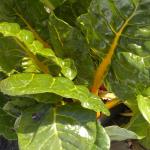
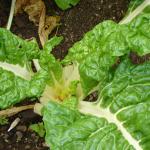
Edible dark green glossy leaves with wide white or cream stalks produced over a long period. Some varieties have red, yellow or orange stalks. They are all edible. Both leaves and stalks are eaten. This is a cut and come again plant, providing leaves for some months before going to flower. Can re-sprout from around the base if cut off when it starts to flower.
Reasonably frost and heat tolerant. Grows well in most soils. For prolific growth apply compost, or well-rotted manure. Resistant to most plant diseases. The multi-coloured ones look good in a flower border.
Culinary hints - cooking and eating Silverbeet
Wash thoroughly and inspect the back of the leaves for insects.
Chop and put in a saucepan with very little water (or just what is on the leaves).
Cover and cook over a low to medium heat until the leaves collapse.
A small amount of nutmeg enhances the flavour.

Your comments and tips