Growing Shallots, also Eschalots
Allium cepa, aggregatum : Amaryllidaceae / the onion family
| Jan | Feb | Mar | Apr | May | Jun | Jul | Aug | Sep | Oct | Nov | Dec |
|---|---|---|---|---|---|---|---|---|---|---|---|
| P | P |
(Best months for growing Shallots in USA - Zone 5a regions)
- P = Sow seed
- Easy to grow. Plant small bulblets, with stem just showing above ground. Best planted at soil temperatures between 46°F and 86°F.
- Space plants: 6 - 8 inches apart
- Harvest in 12-15 weeks. Keep a few for your next planting.
- Compatible with (can grow beside): Lemon Balm, Borage, Carrots, Beets, Silverbeet, Lettuce, Amaranth
- Avoid growing close to: Peas, Beans
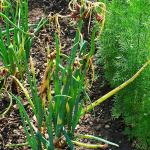
Shallots are grown from small bulbs kept from the main plant. Once they are established, you can keep your supply going indefinitely by saving a few bulblets each year.
A type of small mild multiplying onion, popular in French cooking.
Tree onions or 'walking onions' produce bulbs at the top of the stem.
Shallots are not spring onions and are quite different to the green bunching 'Eschallots' (Allium fistulosum) which, just to confuse us, are also sometimes called 'shallots' in Eastern Australia.
They are more like garlic in their growth as they form a clump of bulbs at the base of the stem.
Culinary hints - cooking and eating Shallots
Use in any recipe instead of onions.
Can be cooked whole, braised gently with other vegetables.
Sometimes pickled.

Your comments and tips