Select your climate zone What is my climate zone?

Growing Pumpkin

(Cucurbita sp.)

Jan Feb Mar Apr May Jun Jul Aug Sep Oct Nov Dec
                  P P P

(Best months for planting Pumpkin in Australia - cool/mountain regions)

P = Sow direct in garden where they are to grow.


  • Easy to grow.
  • Harvest in 15-20 weeks.
  • Sow in garden. Sow seed at a depth approximately three times the diameter of the seed.
  • Best planted at soil temperatures between 20°C and 32°C.
  • Space plants: 90-120cm

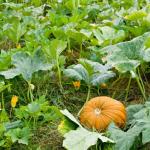
A large trailing plant with yellow, bell-shaped flowers, pumpkin is frost tender. Most varieties will take up a lot of room . Grow them at the edge of your garden patch so that they can spread away from other vegetables. Butternut produces small to medium pear-shaped fruit with deep orange flesh . Buttercup are small to medium round pumpkins with dark green skin. There are a number of large pumpkins, some round and flattish - good for storage and eating - others will produce the "Cinderella coach" type giant round fruit which are not such good eating.

Harvest when the vines die off and the pumpkins' stalks are dry. Leave a small piece of stalk attached to the fruit to prevent damp causing rot. The fruit can be stored for months in a cool airy place. In some parts of New Zealand, they are stored on shed roofs.

Pumpkins sometimes need hand pollination if the fruit are not setting well or die off after starting to grow.

Culinary hints - cooking and eating Pumpkin

Cut up, remove the skin and roast with other vegetables or meat.

Young crisp shoots with young leaves can be cooked and eaten - stewed in coconut milk they are popular in Melanesia. Remove any strings and tough parts and stew until tender, or cook as a vegetable in boiling water 3-5 minutes.

Your comments and tips

09 Jul 10 Mike (United Kingdom - warm/temperate climate)
I have plants still growing from last year and producing new growth and flowers. Will these produce good fruit or should I tear them out and replant?
07 Jun 10 Shane (Australia - cool/mountain climate)
I just moved into a house and the weeds had over grown after clearing out the garden I found a healthy butter nut pumkin vine however I accidently ripped up the roots when clearing it out I have reburried the roots but the vine is dieing how can save it?
16 Jun 10 Chris (Australia - cool/mountain climate)
If the roots were torn then it's probably a lost cause. You could try copious watering to try and save it, but it's late in the season now for pumpkins, anyway.
03 Jun 10 pat (Australia - temperate climate)
i grew my japs by just throwing the inside of pumpkins under some dirt. got heaps of pumpkins but not sure what to do after picking to ripen them.
20 Jun 10 johntone (Australia - temperate climate)
Store the pumpkins for a few months in the shade and they should be ok to use for making chutney, jam, scones,bread etc.Mine seem to last for about 8 months after being picked.Any that get some withering,make some pumpkin soup.yum - yum!
23 May 10 alan wylie (Australia - temperate climate)
please advise on ripening after removing from vine jap pumpkins thank you
23 May 10 Chris@Gardenate (Australia - cool/mountain climate)
Alan, have a look at the comments from Pete and Jef - I think they answer this for you.
22 May 10 Shane (Australia - cool/mountain climate)
When pumpkins are ready they will have a hollow sound if you 'rap' on the outside. Just don't use "Ice T" when rapping or they'll harden. ;-)
23 Jul 10 (Australia - sub-tropical climate)
when the imbilicle [ small curly vine from the top] is dead and dried up, then your pumpkin is ready. Goes for all pumpkins. Get a frost on top and you are LOL.
19 May 10 (Australia - cool/mountain climate)
I have dozens of self sown pumpkins, kent variety, the are getting really big, when do I know when to pick them, and also do they continue to ripen of the vine. hope someone can help.. thaks
1 - 10 of 93 comments Next page >

See comments for all plants

Post a question, comment or tip about Pumpkin


Where are you?


All comments are reviewed before displaying on the site, so your posting may not appear immediately

Home | Vegetables and herbs to plant | Climate zones | About Gardenate | Contact us

This planting guide is a general reference intended for home gardeners. We recommend that you take into account your local conditions in making planting decisions. Gardenate is not a farming or commercial advisory service. For specific advice, please contact your local plant suppliers, gardening groups, or agricultural department. The information on this site is presented in good faith, but we take no responsibility as to the accuracy of the information provided.

Site design and development by Hutchinson Software