Select your climate zone What is my climate zone?

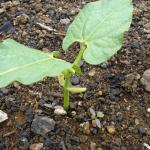
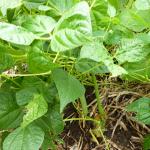
Growing Dwarf beans, also French beans, Bush beans

(Phaseolus vulgaris)

Jan Feb Mar Apr May Jun Jul Aug Sep Oct Nov Dec
P                 P P P

(Best months for planting Dwarf beans in Australia - cool/mountain regions)

P = Sow direct in garden where they are to grow.


  • Easy to grow.
  • Harvest in 7-10 weeks. Pick often to encourage more flower production.
  • Sow in garden. Sow seed at a depth approximately three times the diameter of the seed.
  • Best planted at soil temperatures between 16°C and 30°C.
  • Space plants: 5-15cm

Frost tender, die off in winter. Traditionally sown in rows, dwarf beans also grow well 'broadcast' or scattered over an area. Just scatter the seed (don't worry about the odd ones which are close up). Cover with soil, potting mix, or compost and firm down with the back of a spade or rake. Grown this way the beans will mostly shade out competing weeds and 'self-mulch'.

Keep watered and watch for shield bugs and green caterpillars Pick the beans regularly to encourage new flowers. Flowering will slow right down if you let the beans get too large (hard and stringy) on the plants. For a continuous crop, plant more seed as soon as the previous planting starts to flower. Protect against snails and slugs - they will completely destroy newly sprouted beans, and will eat the leaves off grown plants.

Culinary hints - cooking and eating Dwarf beans

Can be used in salads when young, blanched and cooled.
Will freeze well.

Your comments and tips

18 Apr 10 Heck (Australia - sub-tropical climate)
I have planted dwarf beans for the third time and once again as they reach a height of about 20 cm the stalks go brown and become very soft and the leaves turn yellow and the plant falls over and karks it. I don't think I'm over watering them but we have had a lot of rain of late. I need help please
28 Apr 10 (Australia - sub-tropical climate)
Maybe bean fly (see comment below from brian)
27 Apr 10 (Australia - cool/mountain climate)
It sounds like too much water. Are you growing them in a raised bed to improve drainage?
17 Apr 10 brian palfreyman (Australia - sub-tropical climate)
Soon after the bean sprouts comes out of the ground they need to be sprayed against the bean fly which stings the newly exposed stalk and lays eggs in the stalk and a grub developes which eats the inside of the stalk and the plant dies I spray mine as soon as the bean emerges from the ground and get a good crop,if I forget to spray them I loose them
22 May 10 dan (Australia - tropical climate)
can you tell me the name of the spray to use as we have the same problem.
21 Mar 10 Diane (Australia - sub-tropical climate)
My bean plants were also growing very well, they flowered and produced a few beans but now the leaf ends are going brown and look burned (just like Hellbelle 11 Feb post). I would appreciate some feedback about possilbe causes.
21 Mar 10 george (Australia - sub-tropical climate)
Can anyone help I have tried twice to get my dwarf beans going but by the time they rreach 6 leaf stage they are being eaten by something. or may be sucked by something.
20 Mar 10 monique (Australia - sub-tropical climate)
my beans are really hard what is wrong with them and they are a bit brown
16 Feb 10 Liz (New Zealand - sub-tropical climate)
Rikkyurk, Water the ground well before sowing the beans, then you can leave them for a few days to germinate. But if the weather is very hot and dry, it might help to water after a day. Have you tried a different variety? Some seem easier than others.
13 Feb 10 Rikkyurk (Australia - sub-tropical climate)
I have tried growing from seed twice and only one from 40 seemed to germinate. I am sowing in rows 1.5 - 2cm deep. As directed on the packet I didn't water for 3 days after sowing. They were a fresh packet of seed too. Any tips?
1 - 10 of 22 comments Next page >

See comments for all plants

Post a question, comment or tip about Dwarf beans


Where are you?


All comments are reviewed before displaying on the site, so your posting may not appear immediately

Home | Vegetables and herbs to plant | Climate zones | About Gardenate | Contact us

This planting guide is a general reference intended for home gardeners. We recommend that you take into account your local conditions in making planting decisions. Gardenate is not a farming or commercial advisory service. For specific advice, please contact your local plant suppliers, gardening groups, or agricultural department. The information on this site is presented in good faith, but we take no responsibility as to the accuracy of the information provided.

Site design and development by Hutchinson Software