Select your climate zone What is my climate zone?

Growing Carrot

(Daucus carota)

Jan Feb Mar Apr May Jun Jul Aug Sep Oct Nov Dec
P P P P P       P P P P

(Best months for planting Carrot in Australia - temperate regions)

P = Plant direct in garden where they are to grow.


  • Easy to grow. Sow in garden. Sow seed at a depth approximately three times the diameter of the seed. Best planted at soil temperatures between 8°C and 30°C. (Show °F/in)
  • Space plants: 25 - 30 cm apart
  • Harvest in 12-18 weeks.
  • Compatible with: Onions, Leeks, Lettuce, Sage, Peas, Radishes, Tomatoes, Beans, Celery, Rosemary
  • Avoid growing with: Parsnips, Beetroot, Dill, Brassicas, Fennel
  • A few seedlings

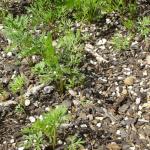
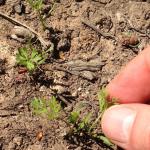
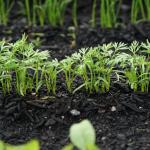
A hardy root vegetable which grows well in deep cool soil. Carrots take about 3 weeks to show themselves and the first leaves look like grass . If broadcast sowing, mix with radish seeds which will germinate quickly and indicate the sown area. In hotter or dry areas, water well before seeding then cover with boards to maintain the moisture and cool soil for more successful germination. Check every week or so.

Over fertilised ground will produce split roots. Protect against carrot fly. It is best to put carrots in a different area of the garden each year for four or five years.

Culinary hints - cooking and eating Carrot

Steamed or raw carrots are tasty. Cook them in a small amount of water until nearly dry then add a pat of butter and teasp of brown sugar to glaze.
They can be added to most casserole-type dishes.
Grate raw carrots and add to salads


Your comments and tips

22 Dec 11, Michael (Australia - temperate climate)
I have tried growing carrots which have germinated however within days they have all disappeared any ideas?
31 Dec 11, Keith Goodwin (Australia - temperate climate)
Michael I would say you have a snail or slug problem
31 Oct 11, clem ward (Australia - sub-tropical climate)
so what soil do you grow carrots in mine are always stunted and deformed clem..
28 Oct 11, Bruce (Australia - temperate climate)
Pull one up and have a look.
28 Oct 11, Bruce (Australia - temperate climate)
Carrots are very small seeds and should be planted as shallow as possible. One method is to mix the seeds with a handful or two of dry sand and run out in a line or sprinkle on the area you plan to grow them. They should be watered enough to keep the sand constantly moist until germination. After that daily in hot weather.
26 Oct 11, Vivienne (Australia - temperate climate)
Hi .... I've just started to pick some of my carrots to check how they are going ( first timer) and they are small and curly, great tops it makes you think they are ready. I have planted the in a veggie mix soil, they are in full sun and are watered every day. They still taste great.
28 Oct 11, Bruce (Australia - temperate climate)
If the carrot tuber is mis-shapened, twisted, curley or forked the soil is too heavy or has too much humis or other vegitable matter. In WA they grow acres of beautiful straight carrots for the Asian market in almost pure sand. If the tops are huge and small tubers the nitrogen content in the soil is too high.
25 Oct 11, matt (Australia - temperate climate)
how many seeds do you plant at each station and how much do you water them.....each day or less?
01 Dec 11, BCW (Australia - temperate climate)
One way to plant carrots is to mix the seed with a cup of sand,make a small shallow groove in the soil with your finger in a line where you want to grow them and run the sand/seed mix into that groove,then water. The seeds are tiny and must not be planted too deep so need to be watered twice daily till they have all germinated otherwise they will dry out and die.
23 Oct 11, zoe (Australia - temperate climate)
How do you know when carrots are ready to harvest?
1 - 10 of 89 comments Next page >

See comments for all plants

Post a question, comment or tip about Carrot


Where are you?


All comments are reviewed before displaying on the site, so your posting may not appear immediately

Home | Vegetables and herbs to plant | Climate zones | About Gardenate | Contact us

This planting guide is a general reference intended for home gardeners. We recommend that you take into account your local conditions in making planting decisions. Gardenate is not a farming or commercial advisory service. For specific advice, please contact your local plant suppliers, gardening groups, or agricultural department. The information on this site is presented in good faith, but we take no responsibility as to the accuracy of the information provided.

Site design and development by Hutchinson Software