Select your climate zone What is my climate zone?

Growing Thyme, also Common thyme

(Thymus vulgaris)

Jan Feb Mar Apr May Jun Jul Aug Sep Oct Nov Dec
              S   T T  

(Best months for planting Thyme in Australia - temperate regions)

S = Plant undercover in seed trays. T = Plant out (transplant) seedlings.


  • Grow in seed trays and plant out 6-8 weeks. Sow seed at a depth approximately three times the diameter of the seed. Best planted at soil temperatures between 15°C and 25°C. (Show °F/in)
  • Space plants: 25 - 30 cm apart
  • Harvest in 42-52 weeks. Root divisions ready in 3 months.
  • Compatible with: Dry-environment herbs (oregano,sage), Eggplant, Cabbage
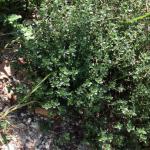
Thyme is slow to grow from seed and is best propagated from root divisions or cuttings.

Seeds need to be started in a warm frost- free place. A greenhouse is ideal. Keep under cover until about 10cm (4in) high, then harden off by putting outside during the day and inside at night for about a week. Transplant the young plants into their final positions, in well-drained soil in full sunlight. Harvest sparingly in the first year.

Root divisions, from 3 or 4 year old plants, can be taken in late Spring and then planted into a sunny spot.

Water sparingly once established and avoid feeding. The plants will have most flavour in Summer months.

Thyme dies down in the winter, if frosty, but a good layer of mulch round the plant will protect the roots and provide enough food to keep it growing.

Culinary hints - cooking and eating Thyme

Common, lemon, orange and caraway thyme are used in cooking.
Thyme is mainly used with meat and fish but also tastes good with vegetables such as mushrooms, beans and carrots.

The flavour can be very intense so thyme is best used sparingly.

Your comments and tips

10 Jan 12, Sylvanna (Australia - tropical climate)
I grew tomatoes, herbs and strawberrys. They are all struggling with the hot summer heat, The tomatoes have tomato fruit and I am using the herbs basil, mint,parsley in cooking: Oregano and coriander are struggling: The strawberries are not going to make it: late afternoon when the heat has dropped I give all the plants a cool light watering to help them. What else could I do to help these plants to get through the hot summer? I welcome all expert advice: Compassionate gardener:
03 Jul 11, Hank (Australia - temperate climate)
I have never had any luck with thyme as it always dies on me. Any suggestions welcome. Hank
06 Dec 11, MArtin (Australia - sub-tropical climate)
I'm in (sub-) tropical Barbados. Same here: My thyme dies after 2-3 months, leaves getting smaller, get lost, whole plant dries out. Tried different locations from sunny to shady - same result. I thought it might need regular cutting, but the instructions above say harvest sparely. What can we do?
08 Jun 10, Cheryl (Australia - sub-tropical climate)
We've inherited a big thyme herb in our new house/kitchen garden. How long do they last for? Do they have a life span? I'm not sure how long it's been there for. It's been dying down but it's winter now.
13 Jun 10, hzprstn (Australia - temperate climate)
I planted a thyme "shrubbery" alongside my driveway 25 yrs ago, and it still thrives. Every few years I cut it back well, every spring when it flowers it is covered in bees. In winter it looks pretty dead and dry - but in spring it is a delight. You can take cuttings too - handy if you want to have thyme in a different place in the garden, once you have striken ( ?) new plants you can put them where you want, and then remove the parent plant. Enjoy !

Post a question, comment or tip about Thyme


Where are you?


All comments are reviewed before displaying on the site, so your posting may not appear immediately

Home | Vegetables and herbs to plant | Climate zones | About Gardenate | Contact us

This planting guide is a general reference intended for home gardeners. We recommend that you take into account your local conditions in making planting decisions. Gardenate is not a farming or commercial advisory service. For specific advice, please contact your local plant suppliers, gardening groups, or agricultural department. The information on this site is presented in good faith, but we take no responsibility as to the accuracy of the information provided.

Site design and development by Hutchinson Software